Hospital information system in Oman
We offer HIS software for Oman care teams to manage visits, bills and review records, with local claims and data needs assessed for each proposed rollout.
Best fit in Oman
A private hospital, medical centre or polyclinic in Oman where an insured or self-pay visit brings registration, the consultation, diagnostics, pharmacy and billing into one record. A hospital information system should make that record useful to the treating team and understandable to the people reviewing the bill.
Prerequisites and where things stand today
- Self-pay workflow: Registration, the consultation, prescribing and billing in Care can be reviewed without a Dhamani decision.
- Insured workflow: Needs the Dhamani scope confirmed first. A live Dhamani interface is not confirmed. Review the receiving specification, transaction types and testing requirements.
- Clinical exchange: A live Al Shifa/NEHR interface is not confirmed. Dhamani and Al Shifa/NEHR are separate programmes and each needs its own scope.
- Data processing permit: MTCIT identifies health data among the categories requiring a processing permit. Your organisation addresses the permit and processing responsibilities. Buying a system does not obtain that permission.
- Hosting: NextHealth’s deployment policy uses an in-country cloud region wherever regulation requires it. The actual environment is confirmed for the project, together with support access and any transfer conditions.
- Interface language: The current product interface is English. A local-language interface or an Oman office is not claimed.
The local workflow
The Financial Services Authority’s Dhamani platform exchanges health insurance information between healthcare and insurance organisations. Its expansion into pharmacy integration makes the relationship between prescriptions, dispensing and insurance transactions an important scoping question. Dhamani should not be confused with the Ministry of Health’s Al Shifa and National Electronic Health Record environment.
Oman’s Personal Data Protection Law and its executive regulations require attention to health data processing. Access roles, two-factor sign-in and audit records support a review of who can use patient information. They are not a substitute for facility licensing or professional judgement.
Confirm before scoping
- Do you bill mostly self-pay patients, insured patients or both?
- Is Dhamani in scope, including any pharmacy transactions?
- Is a clinical exchange with Al Shifa/NEHR needed, and on what basis?
- Which health data processing permit applies to your organisation?
- Which hosting, support access and transfer conditions apply?
Where the products fit
Care supports registration, appointments, clinical notes, prescribing and billing. Care Clinics Pro adds laboratory, radiology and claims. Care Hospitals adds inpatient and nursing work. Engage supports booking, packages and patient relationships for private clinics. Flow holds policies, staff credentials, document versions, incidents and risk actions. Its parent, Alpha Health Group, operates healthcare facilities and consults on accreditation in the UAE.
Flow Quality indicators is still being completed. Review its availability separately before a rollout depends on it.
Build the scope around one visit
Start with the buyer’s own workflow, cash or insured, then move to technical discovery. Bring a sample patient journey and your payer requirements, and review the clinical record and the proposed claims output together.
Bring three things to your Oman demo
A useful first conversation starts with your own work, not a feature list.
Book a demo-
A patient encounter
One representative visit, from registration to the signed clinical record.
-
A payer or payment workflow
The claim, invoice or package your team handles most, and the response it needs.
-
An evidence question
One licensing, quality or inspection requirement you need to be able to show.
What your teams can run in Oman
Each product is selected and scoped on its own. These are the modules most relevant to Oman, with how each one is bought.

NextHealth Care
Keep registration, clinical notes, prescriptions and billing on one patient record, with plans for outpatient clinics and hospitals.
8 modules most relevant to Oman
-
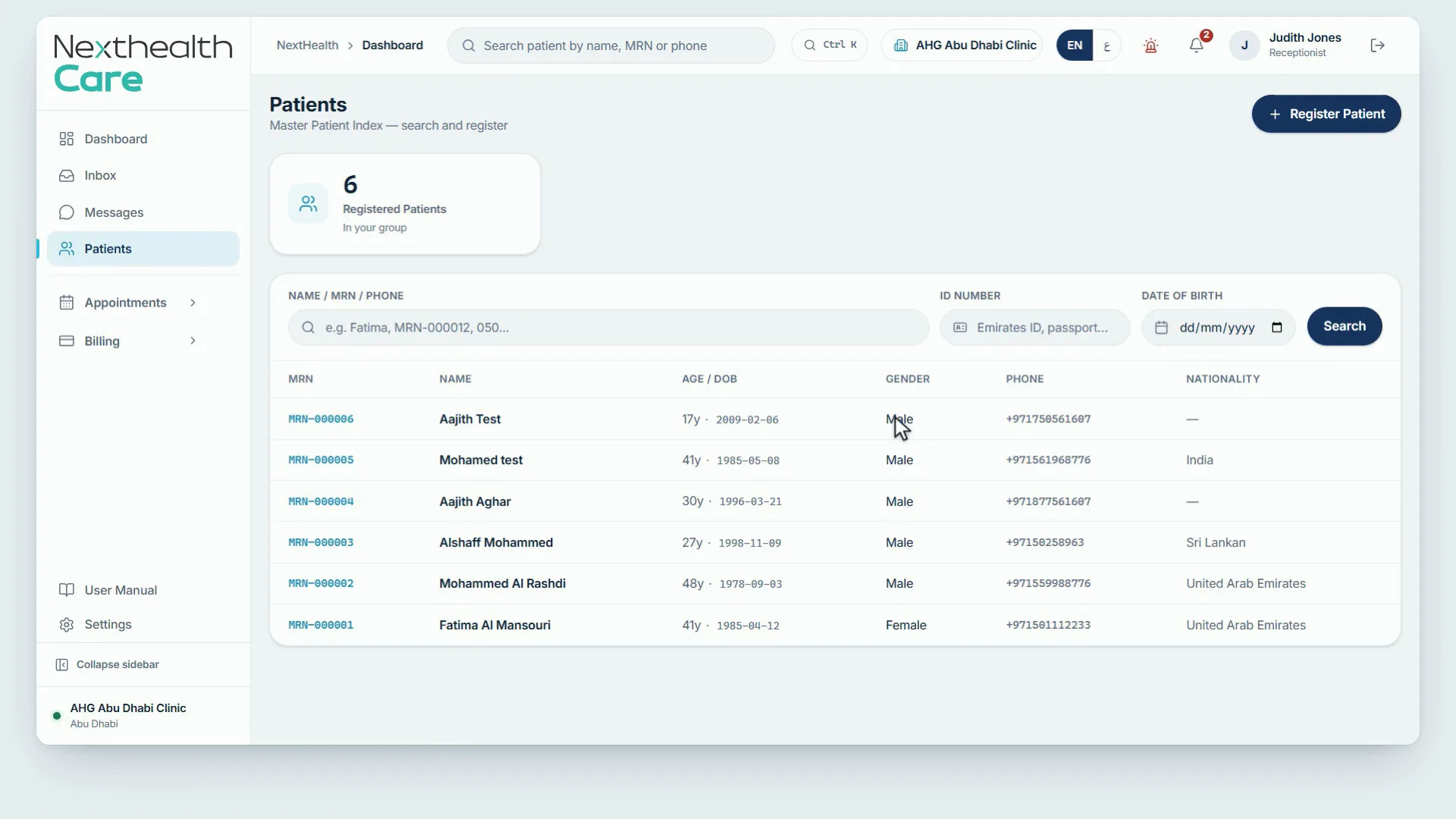 Patient Registration Create a usable patient record with guided registration, validation before saving and support for duplicate prevention. Reception can find returning patients before creating another record and capture the information needed by the teams involved in care. Included in every Care plan, this module establishes the patient identity that the visit depends on. Included in Care Clinics, Care Clinics Pro and Care Hospitals. Explore
-
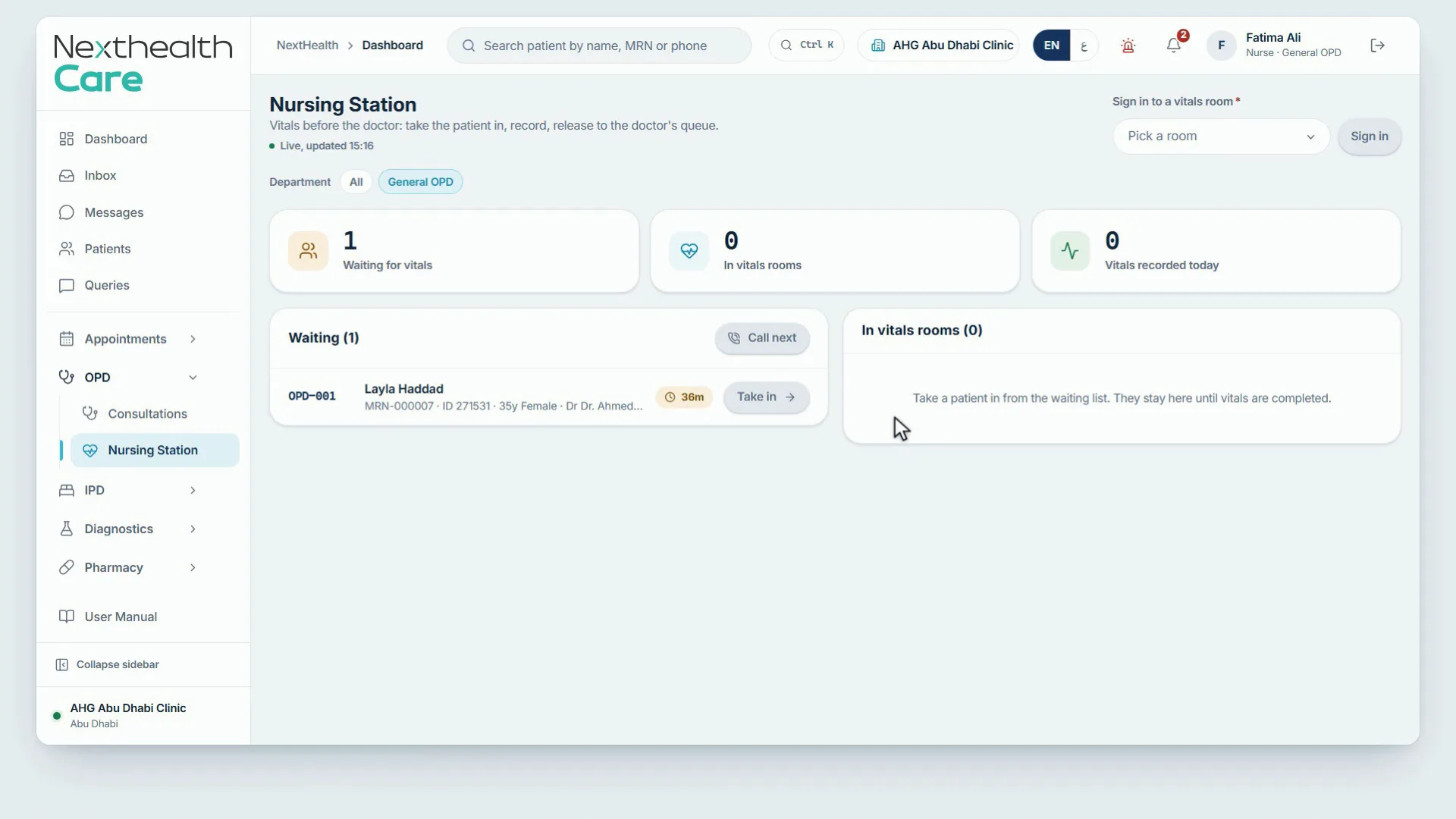 Clinical Documentation & EMR Keep vitals, allergies, history and clinical notes together in the consultation workspace. NXH Care provides structured fields, templates, ICD-10 and CPT lookup, and optional dictation transcribed on the customer’s own infrastructure. The treating doctor signs the note, which is then frozen, and any later change is a signed addendum linked to the original. Included in all three Care plans. Explore
-
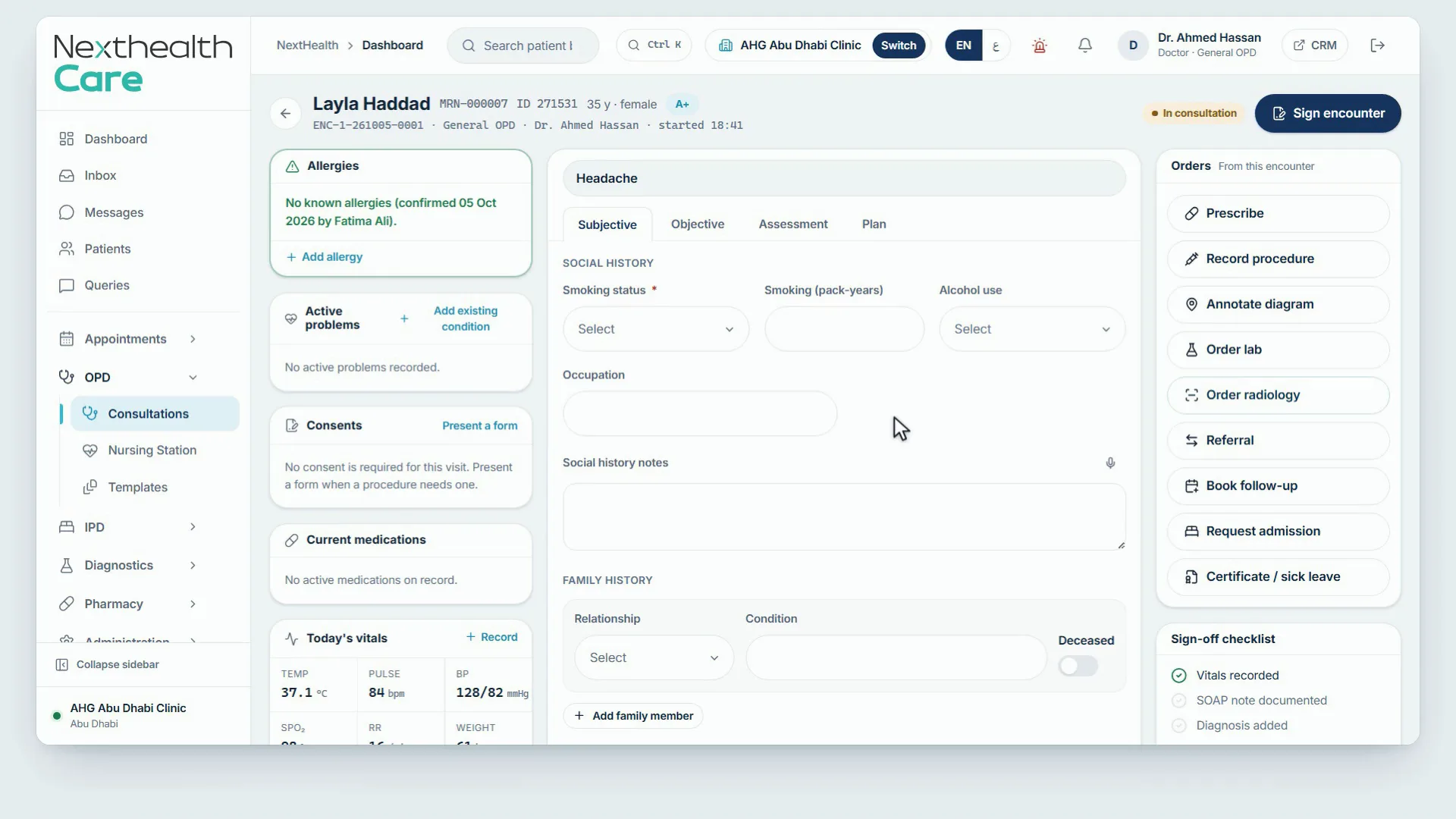 e-Prescribing Search medicines by brand or generic name and prepare prescriptions within the patient’s Care record. The workflow presents allergy and interaction alerts for clinical review and keeps any override with its reason. The treating professional is responsible for the decision, and pharmacy dispensing depends on the selected plan or add-on. Included in all three Care plans; dispensing and ward administration depend on the relevant modules. Explore
-
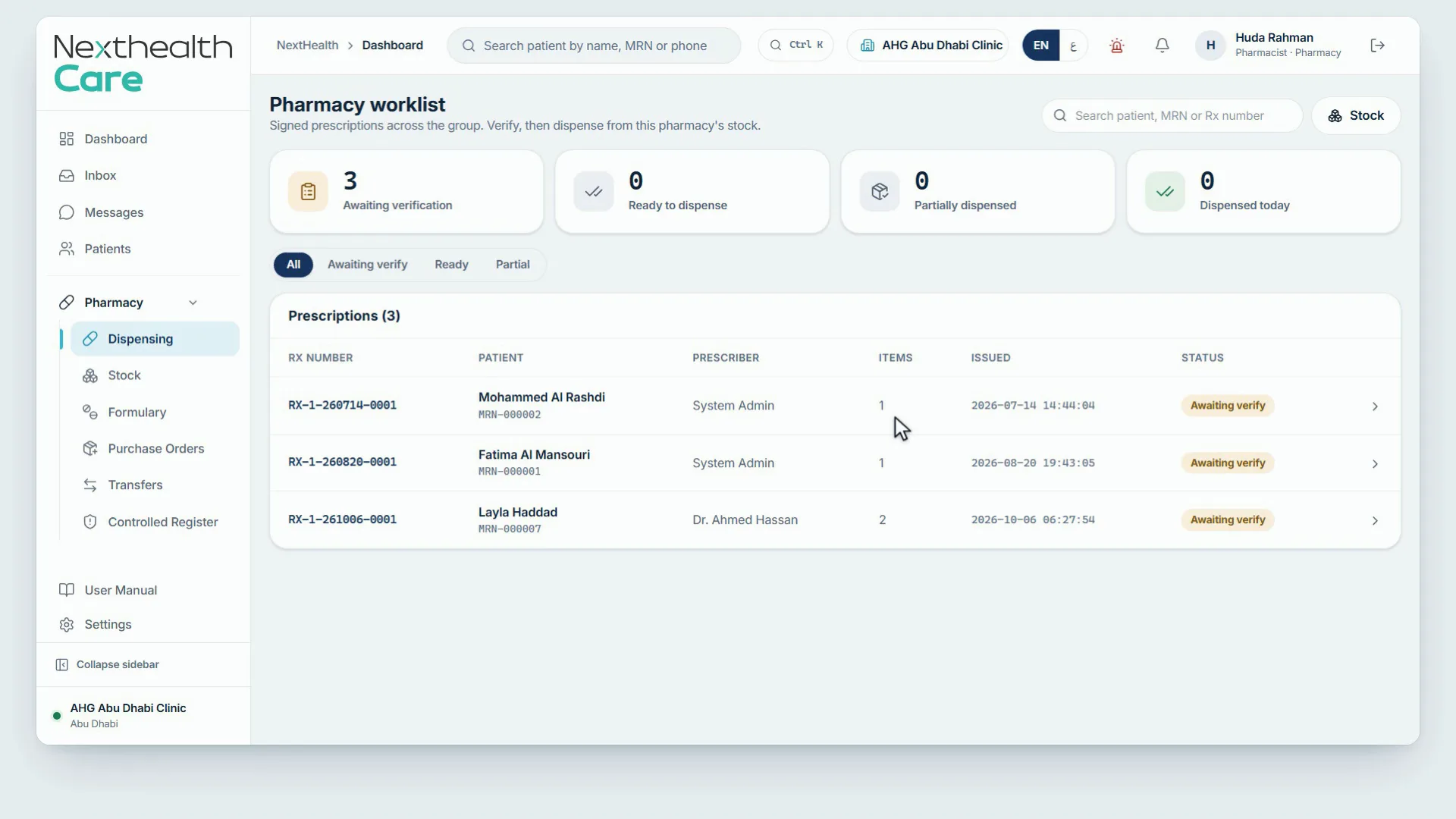 Pharmacy & Inventory Dispense against the electronic prescription while tracking medicine batches, expiry dates and stock activity. NXH Care updates the controlled drugs register with recorded movements and flags reorder items. Pharmacy and stock is included in Care Hospitals and available as an add-on for clinic plans, linking the prescribing record with the pharmacy workflow. Included in Care Hospitals; available as an add-on to Care Clinics and Care Clinics Pro. Explore
-
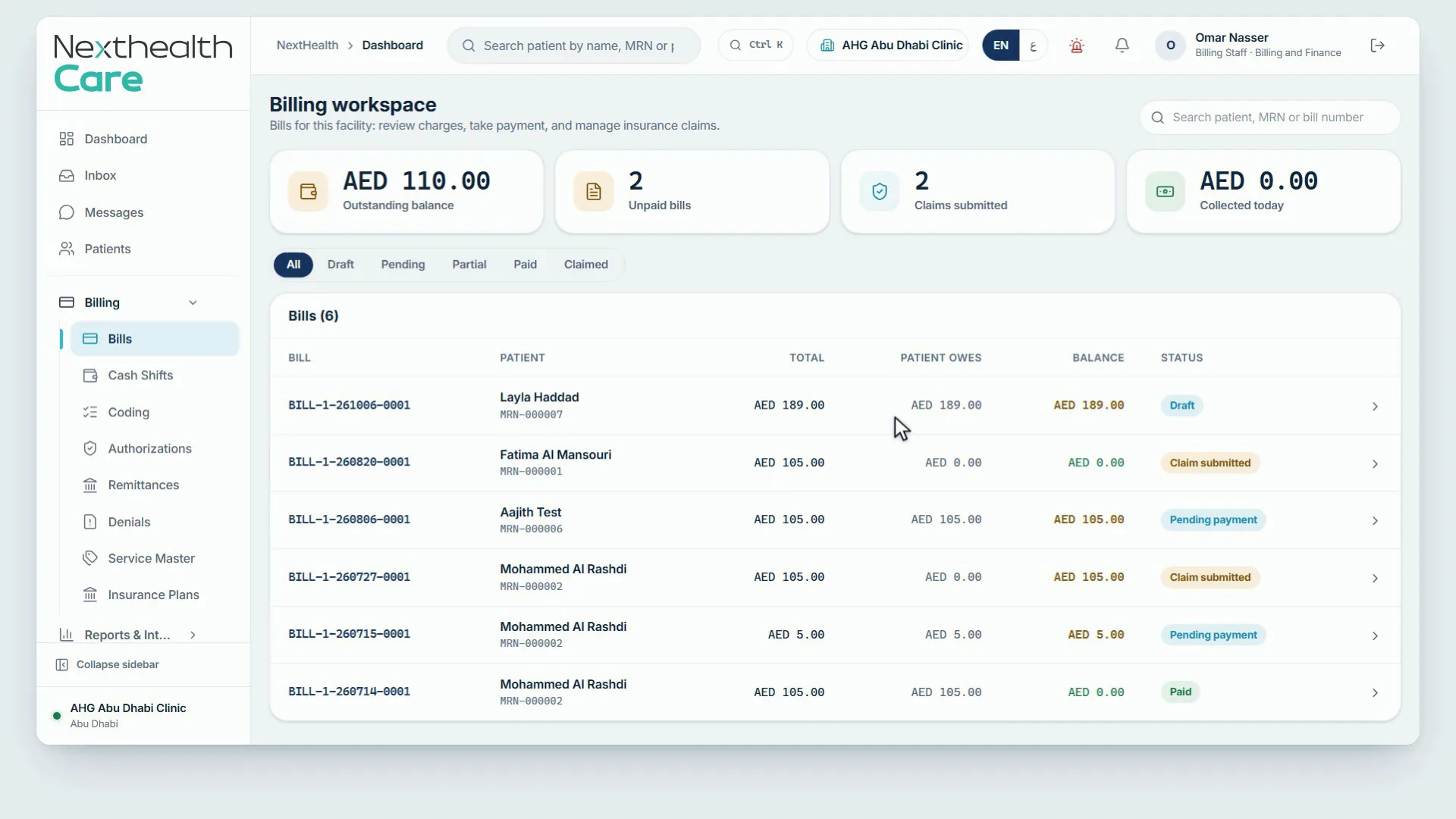 Billing & Charge Capture Connect recorded care with its financial outcome. When a consultation is signed, NXH Care opens a draft bill and composes charges from procedures, laboratory, radiology and dispensed medication, priced from the service catalogue or the payer’s tariff. The total is divided between insurer and patient, and discounts, refunds and adjustments are limited to permitted roles and audited. Included in all three Care plans; insurance claim processing is separately licensed. Explore
-
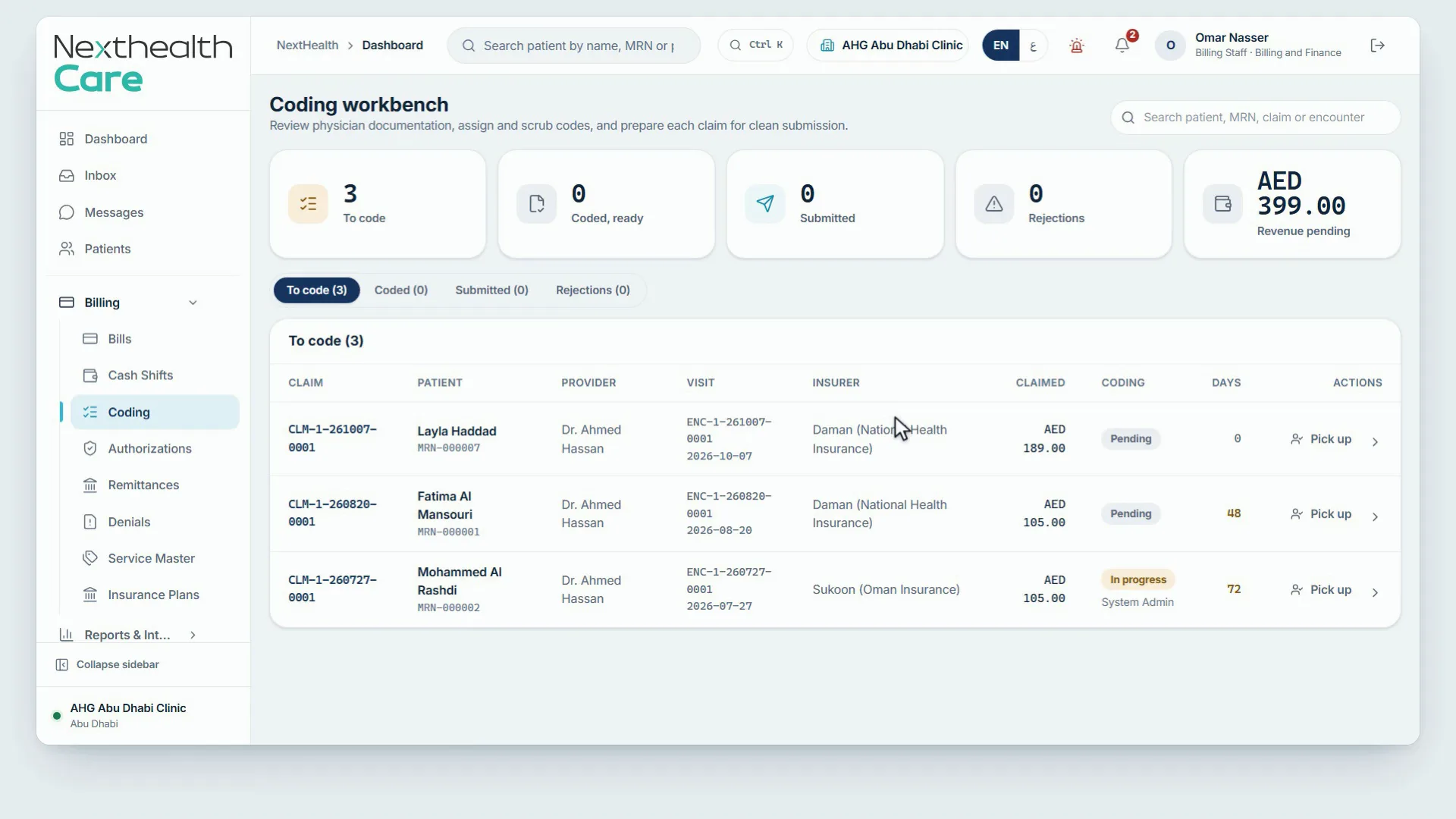 Insurance Claims & Approvals Keep the insurance workflow attached to the patient visit. NXH Care checks eligibility where the payer’s service is connected, tracks prior authorisations, builds claims from the visit record for the payer’s gateway and checks them against payer rules. Submission, acknowledgement, decision and payment are separate statuses, and a rejection carries its coded reason into a correction and resubmission. Included in Care Clinics Pro and Care Hospitals; available as an add-on to Care Clinics. Explore
-
Medical Records Management Follow completion, access and release of the medical record. NXH Care lists incomplete records against the responsible clinician, logs views of patient records, runs release of information requests with a disclosure log, and asks for a reason before a chart is opened outside the care team. A different person reviews that access. Retention and disclosure decisions stay with your organisation. Included in all three Care plans. Explore
-
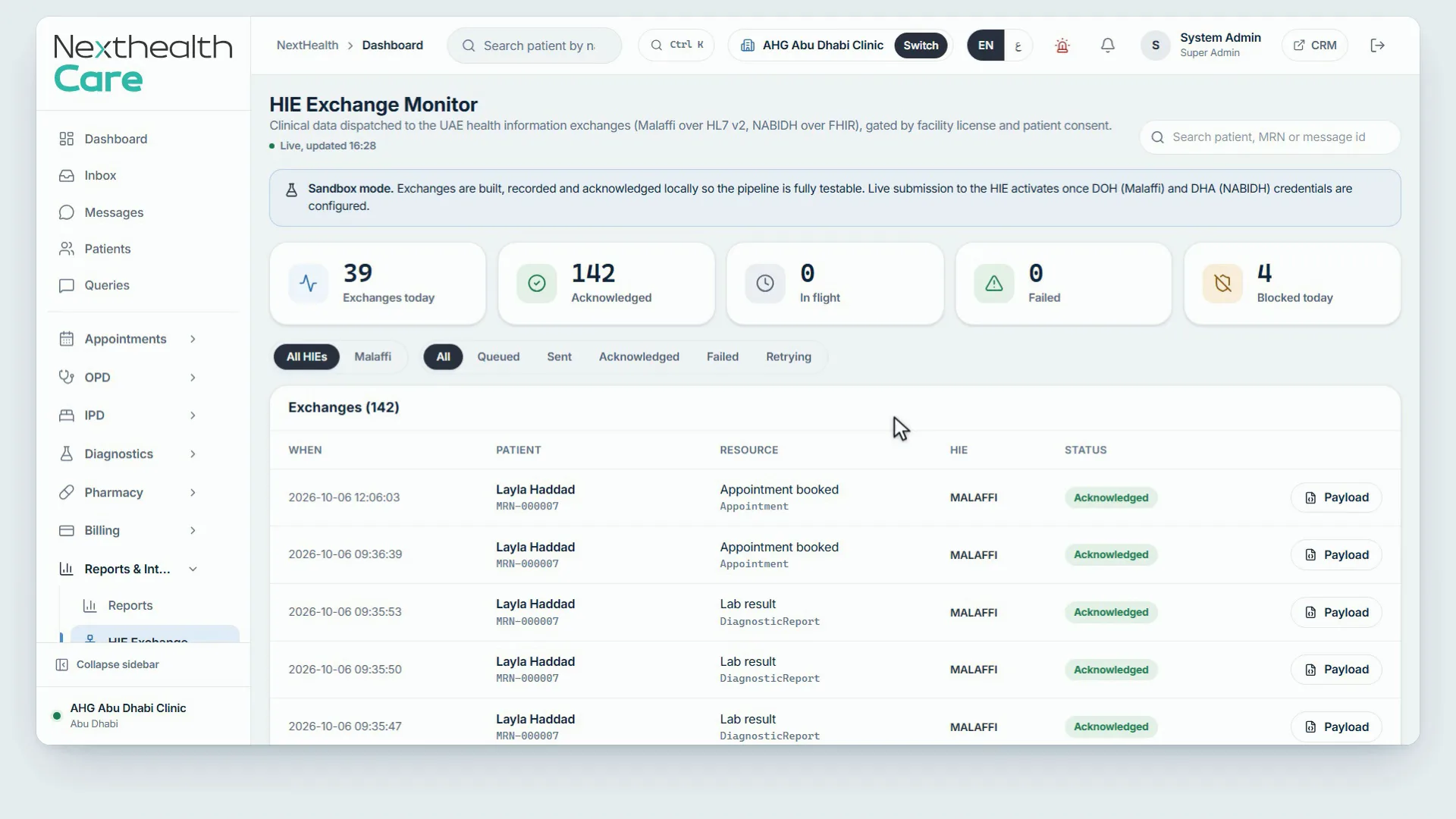 Health Data Exchange Send clinical information to the exchange your regulator runs and keep the response. NXH Care has adapters for Malaffi and Riayati over HL7 v2.5.1 and for NABIDH over FHIR R4, with an exchange monitor showing each exchange from queued to acknowledged or failed. A facility is connected only after its pack, licence, credentials and onboarding are agreed. Available with any Care plan. Applicable regulatory integration pack; available with any Care plan subject to confirmed scope and onboarding. Explore


NextHealth Flow
Keep documents, workforce records, incidents and quality work organised across your facilities, starting with the modules you need.
3 modules most relevant to Oman
-
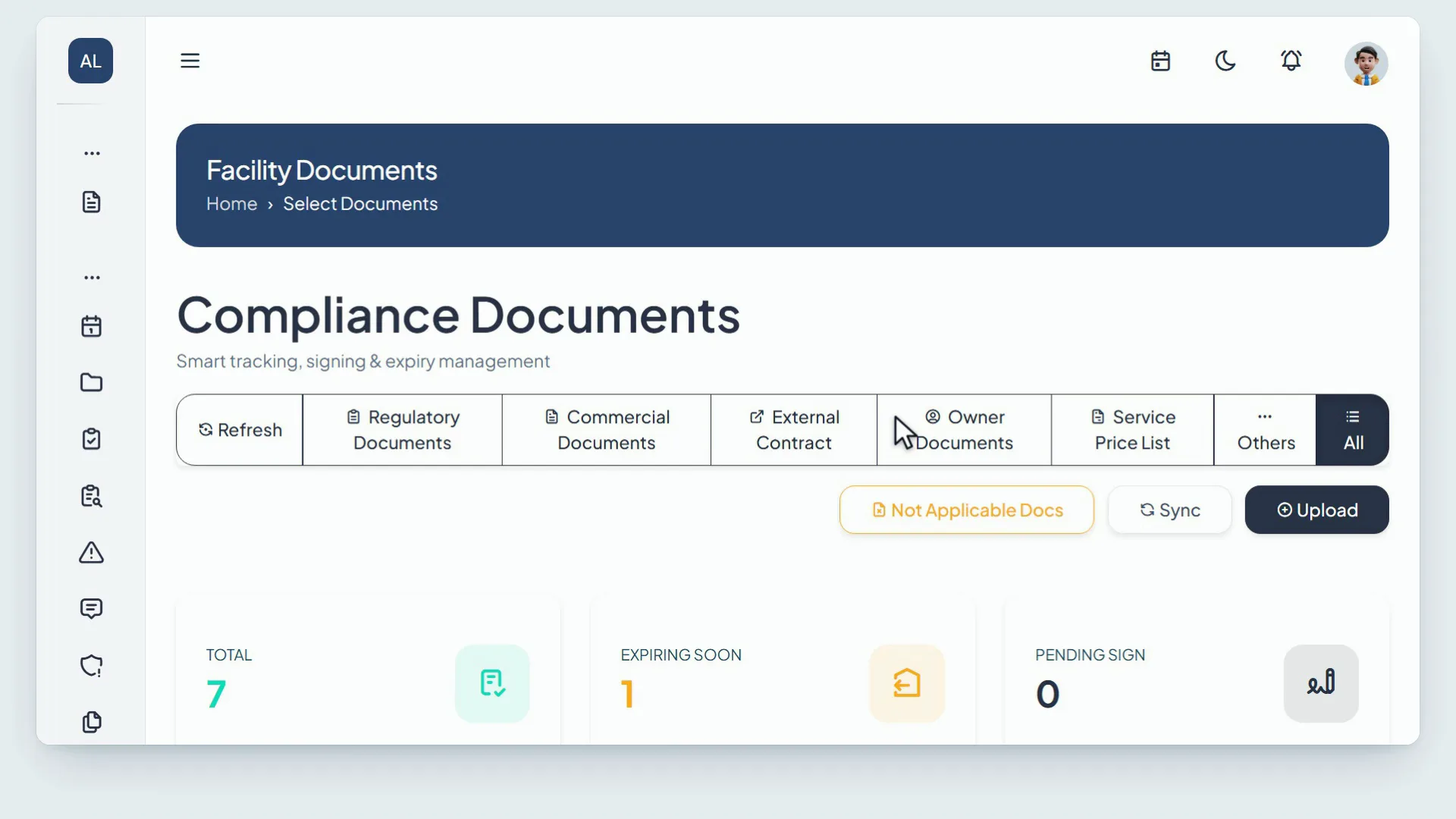 Document hub Keep facility licences, contracts and documents with their dates, versions and signatures in NXH Flow. Review and expiry reminders help teams organise the next action. Outside parties can sign through a link confirmed with a one-time code. Choose Flow Documents separately or alongside Flow Quality when policy preparation and audits are also needed. Flow Documents is sold separately Explore
-
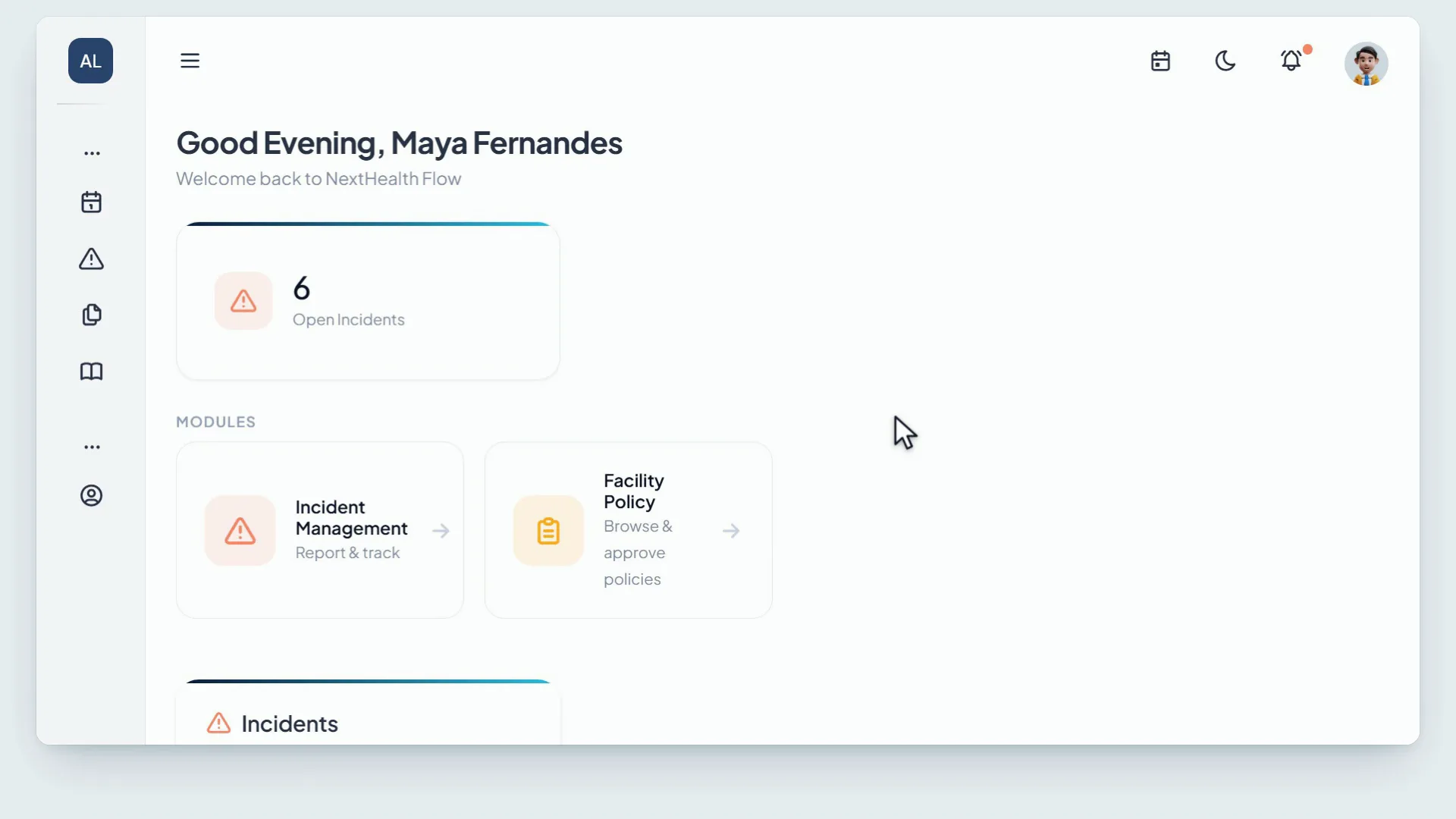 Credentials and licences Keep professional licence numbers, authorities, expiry dates and copies on the staff record in Flow HR. Store passports and verification reports alongside them, remind staff before expiry and record renewal details. This supports credential administration while the facility remains responsible for checking eligibility and the validity of the evidence it holds. Flow HR is sold separately Explore
-
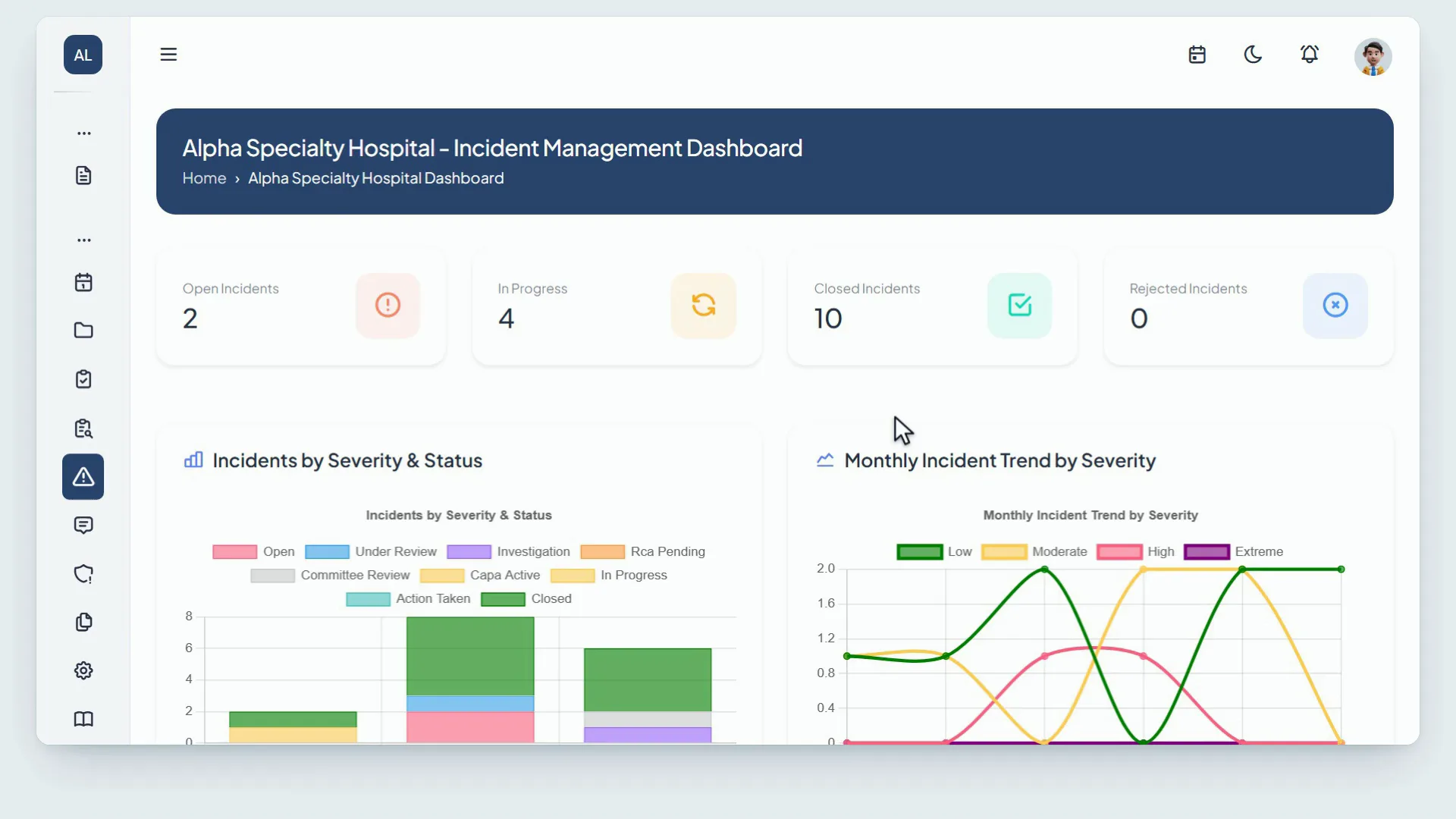 Incident management Record incidents, harm levels, investigations and corrective and preventive actions in NXH Flow. Flag sentinel events, record root cause analysis and take each action through approval to closure. Flow Incidents is sold separately, or paired with Complaints. Flow Incidents is sold separately Explore

NextHealth Engage
Bring enquiries, bookings, client records and follow-up into one commercial workspace, with core tools and add-ons for your clinic.
2 modules most relevant to Oman
-
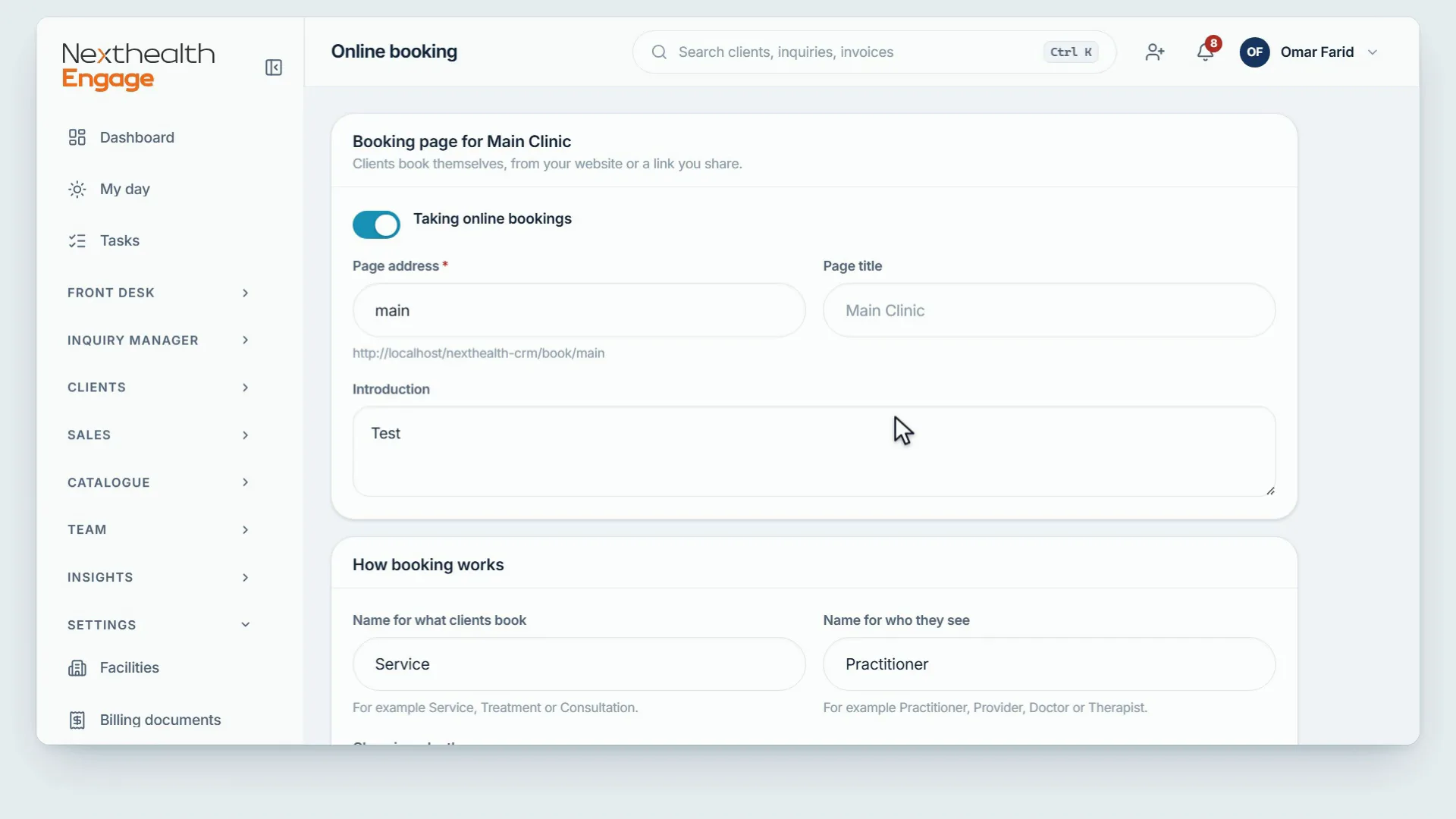 Online booking Offer branch booking and team pages that follow the same rules as your front desk. NXH Engage supports approval of online requests, deposits to hold slots and a widget, API and webhooks for your website. Review the patient’s booking journey alongside the branch schedule and its selected confirmation and payment arrangements. Part of the Online booking add-on Explore
-
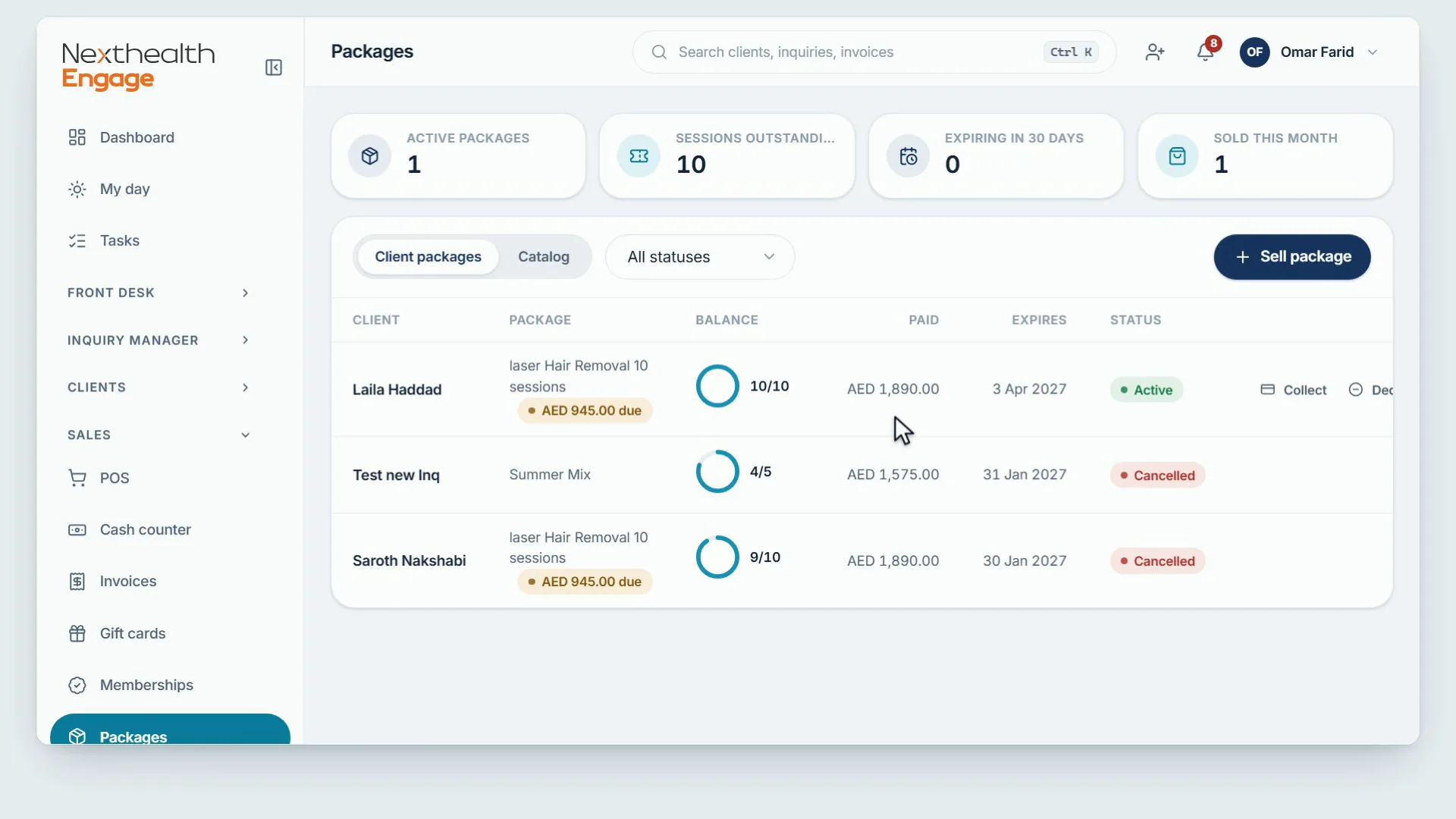 Packages and memberships Keep package session counts, expiry dates and membership allowances visible around the client’s visits. NXH Engage reduces package balances as sessions are completed and supports membership renewals, gift cards and wallet credit. The front desk can review the available balance before checkout and explain the next transaction in the context of the purchased plan. Part of the Billing and point of sale add-on Explore
Running more than one product? NXH One connects their shared patient, staff and facility records. Explore NXH One

Common questions
-
Care provides clinical and billing workflows through clinic and hospital plans. Engage supports patient relationships, and Flow supports operational evidence. Local connections, coding, hosting and language requirements are reviewed separately for the proposed implementation.
-
A live Dhamani connection is not confirmed. Review the required transactions, receiving specifications and test evidence with the implementation team before treating Dhamani exchange as part of an operational Care deployment.
-
No. Dhamani concerns health insurance information exchange, while Al Shifa and NEHR sit within Oman’s Ministry of Health digital health context. Each connection needs its own scope; support for one cannot establish the other.
-
No. MTCIT identifies health data among the categories requiring a processing permit. Your organisation must determine and fulfil its applicable obligations. Product access controls and audit records can support review but do not obtain permission.
-
Agree the hosting environment and any transfer conditions before go-live. NextHealth’s policy uses an in-country cloud region wherever regulation requires it. No specific Oman environment, cloud provider or completed deployment is asserted here.
-
Yes. The products are sold separately, allowing the selected clinical workflow and operational modules to be scoped around your priorities. Confirm the required data relationships and implementation sequence before expanding the rollout.
Regulatory references 3
Official sources for the local context on this page, checked on 11 October 2026. They describe each programme, not a NextHealth connection.
Not answered here? Contact the team